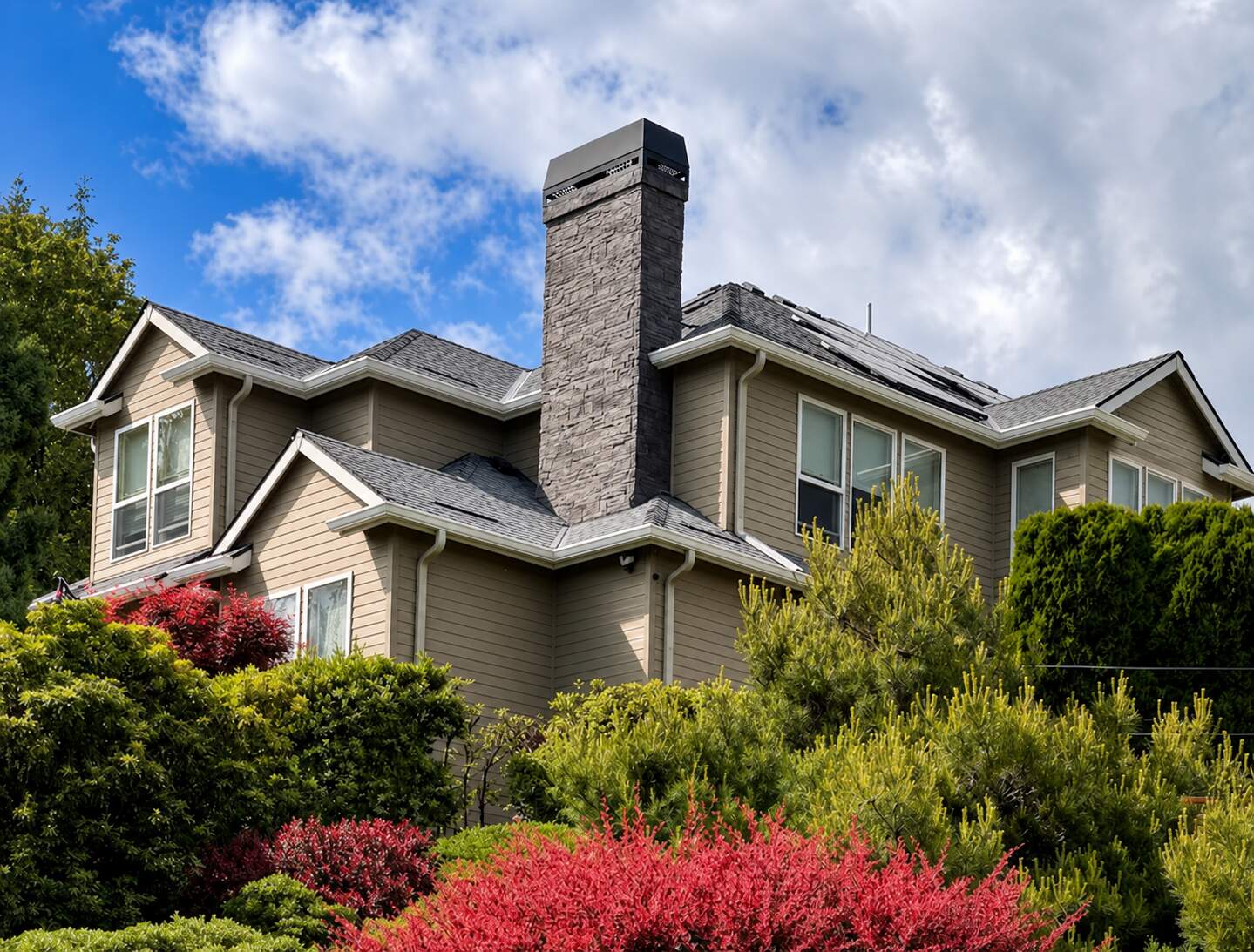
How Often Should You Sweep Your Chimney in Portland?
If you burn wood regularly, sweep your chimney at least once a year. That’s the NFPA 211 standard, and it applies whether you burn nightly all winter or just on weekends. The trigger is creosote: once buildup in your flue reaches the Chimney Safety Institute of America’s 1/8-inch threshold, it’s time for a professional chimney cleaning.
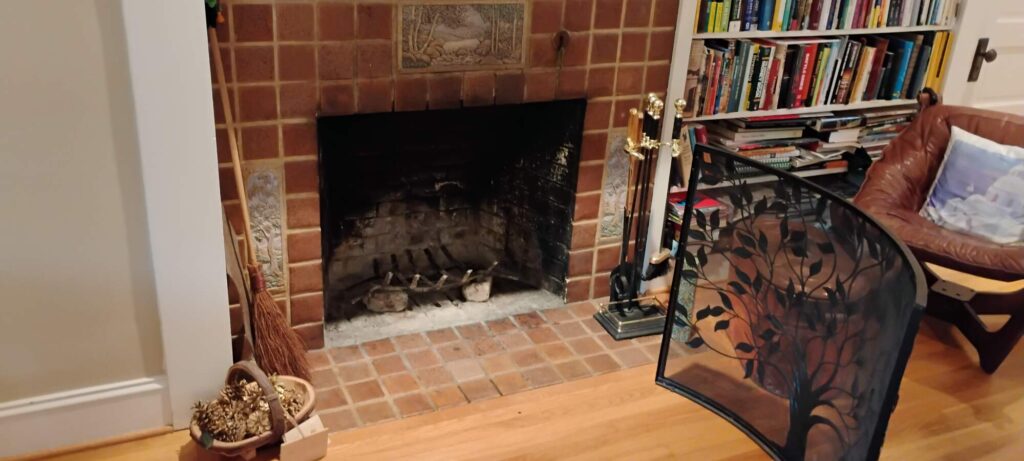
That baseline is a floor, not a ceiling. How often your Portland chimney needs sweeping depends on usage type, broken down below.
How Often to Sweep, Based on How You Use Your Fireplace
| Usage Type | Minimum Sweep Frequency | Why |
| Daily or regular wood burning | Once a year, possibly mid-season for heavy use | Fastest creosote buildup |
| Occasional or weekend wood burning | Once a year | Buildup and nesting still occur |
| Gas fireplaces and inserts | Once a year | Soot, blocked venting, spider webs, CO safety |
Daily or Regular Wood-Burning Use
If your fireplace is a main heat source, your flue builds creosote fastest, and an annual sweep is the minimum. Burning more than a cord a season? Have it checked mid-season too, since heavy use can push creosote past a safe level before next year’s sweep.
Occasional or Weekend Wood Burning
Lighter use doesn’t mean you’re off the hook. Weekend fires still call for an annual check, since creosote can build up, and an unused flue is an easy target for animals to nest in during the off-season.
Gas Fireplaces and Inserts
Gas fireplaces and inserts need an annual sweep and inspection too, for different reasons than wood-burning units: soot buildup, blocked venting, spider webs, and debris that interfere with airflow and carry carbon monoxide risk if left unchecked. If it’s been a year or more, schedule a chimney inspection.
How to Check for Creosote Buildup Yourself
You don’t need a professional to get a rough read on your flue.
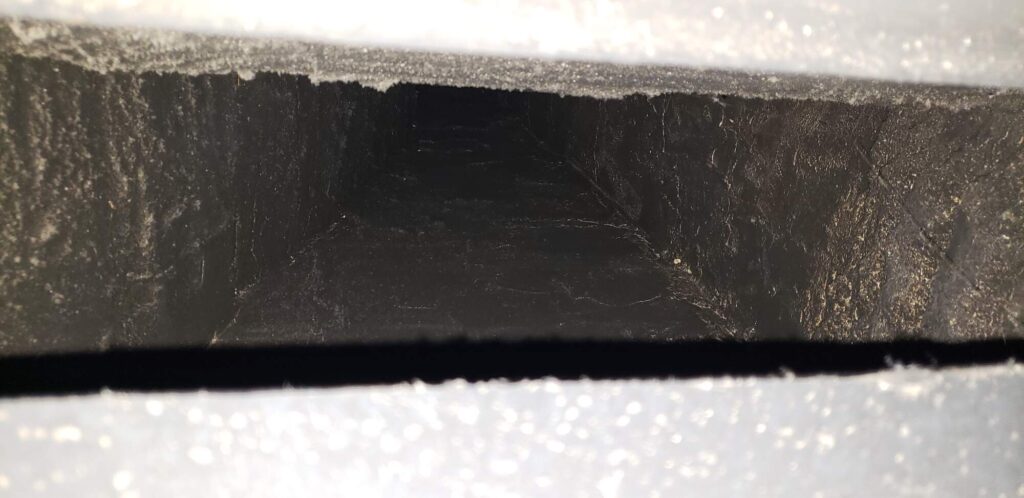
With the damper closed and no recent fire, shine a flashlight into the firebox and flue. Flaky, dry, dark buildup is typically safe. If you can scrape it with a fireplace tool and it measures around 1/8 inch, that’s the Chimney Safety Institute of America’s benchmark for scheduling a sweep.
More important than the measurement: glazed, shiny, or tar-like creosote is highly flammable and a serious fire risk at any stage, so sweep immediately regardless of thickness.
Our OCSA Certified Chimney Sweeps, Earl and Angelica, check for exactly this during every Level 1 inspection, so you’re not left relying on a flashlight and guesswork.
Prefer to have a pro handle it? We offer creosote removal from your flue. Not sure it warrants a call? Our guide to 5 signs your chimney needs sweeping has the details.
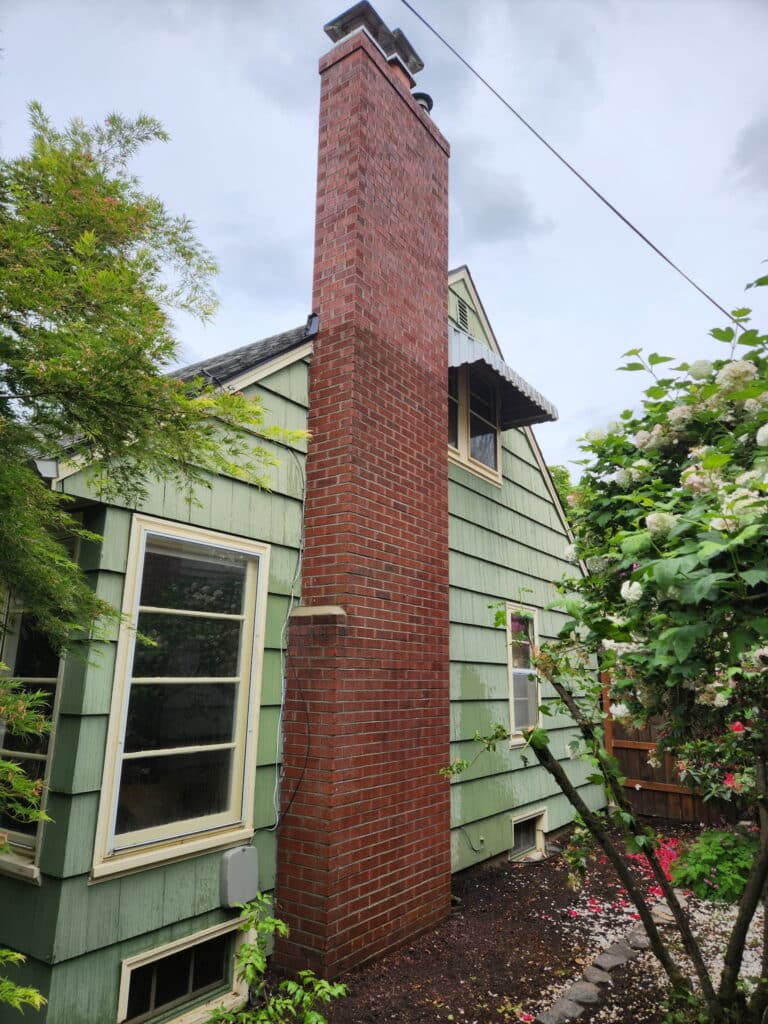
Portland’s Wet Climate and Burn Restrictions Change Your Schedule
Portland’s wet climate speeds up creosote buildup. Moisture in the air, and often in improperly seasoned firewood, makes creosote burn cooler and glaze faster than in drier climates.
There’s also a seasonal reason to get ahead of it: Multnomah County enforces wood smoke restrictions every year from Oct. 1 through March 1. On a Yellow Day, air quality is moderate and voluntary curtailment is recommended; on a Red Day, air quality is unhealthy and a mandatory 24-hour burn restriction applies, advisory issued by 11 a.m. and effective at noon. Rules cover fireplaces, inserts, wood stoves, and fire pits, though hardship and primary-heat-source exemptions exist. See Multnomah County’s Yellow and Red Day restrictions for details.
Use burn season as your annual cue: get swept before Oct. 1 so you’re ready once restrictions kick in. If you’re due, our Portland chimney sweep services can get you scheduled ahead of the season.
Ready to Schedule Your Chimney Sweep?
An annual sweep keeps your chimney ready for Portland’s burn season, whether you burn wood nightly or run a gas insert. Portland Chimney & Masonry Inc. brings over 40 years of experience, OCSA Certified Chimney Sweeps Earl and Angelica, and EPA Lead-Safe certification to every job.
For more on what a full inspection covers, see our full chimney maintenance and inspection guide.
Frequently Asked Questions
Does a gas fireplace need to be swept every year?
Yes. Gas units don’t produce creosote, but they still need an annual sweep and inspection to clear soot, check for blocked venting, and rule out spider webs or debris that affect safe operation.
What happens if you skip a year of chimney sweeping?
Skipping a sweep gives creosote more time to build toward, and past, the 1/8-inch threshold professionals use as a cleaning trigger. In Portland’s wet climate, buildup can also glaze faster, raising fire risk regardless of how much you burned that year.
How do you know if creosote buildup is dangerous?
Thickness is one signal: around 1/8 inch means it’s time to sweep. But appearance matters just as much: glazed, shiny, or tar-like creosote is dangerous and should be swept right away no matter how thick it measures.
