What Is a Chimney Cap?
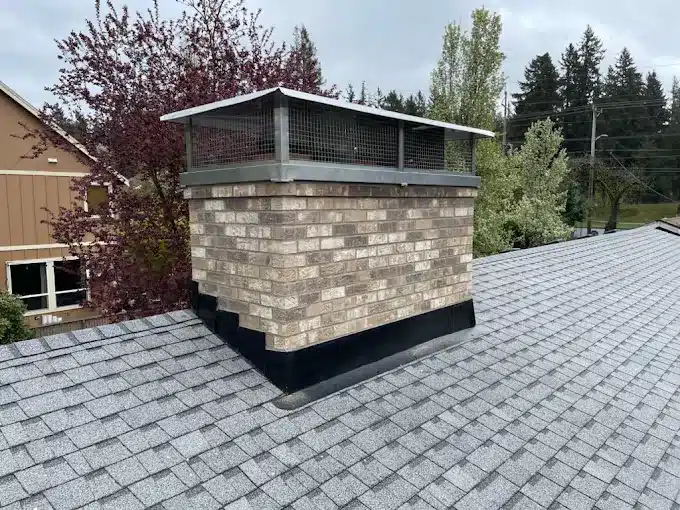
A chimney cap is the metal cover installed on top of your flue, the vertical shaft that carries smoke and combustion gases out of your home. It’s small, but it does a lot of work.
Most caps have three parts. The base band clamps or screws around the flue tile to hold the cap in place. The mesh screen wraps the sides, keeping embers in and animals out while still letting smoke escape. The hood sits on top like a small roof, shielding the opening from rain and snow without blocking airflow.
If your chimney has more than one flue, you may need more than one cap, or a single multi-flue cap sized to cover all of them. Either way, it’s one of the cheapest, most overlooked parts of chimney maintenance.
Chimney Cap vs. Chimney Crown: What’s the Difference?
Homeowners often use these terms interchangeably, but they’re two different components with two different jobs.
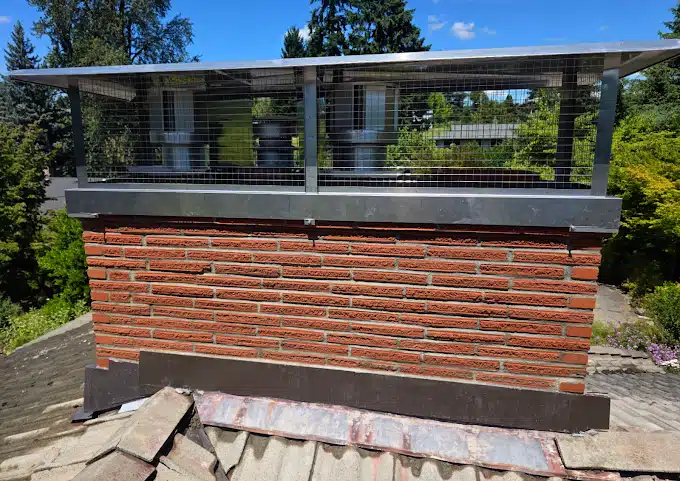
A chimney cap is the removable metal piece covering the flue opening only, the part smoke actually passes through. A chimney crown is the concrete or mortar slab covering the entire top of the masonry chimney, flue included, sloped slightly to shed water away from the brick.
Think of the crown as the roof of the whole chimney structure and the cap as the vent cover on top of it. A chimney can have a solid crown and still need a cap, and a damaged crown won’t be fixed by adding one.
What Does a Chimney Cap Protect Against?
A chimney with no cap is an open pipe straight into your living space. Rain, wildlife, sparks, and wind can all travel down that same opening. A properly fitted cap addresses all four at once, one of the simplest upgrades for long-term chimney health.
1. Rain and Snow Intrusion
Water is the most damaging thing that gets into an uncapped chimney. It soaks into the flue lining, rusts the damper, and works its way into the masonry, where repeated freeze-thaw cycling cracks brick and mortar from the inside out. That moisture also mixes with creosote to form a corrosive paste that eats away at metal liners. A cap’s hood is built specifically to block rain and snow while still letting the flue vent normally.
2. Animal Entry
An open flue looks like a ready-made den to birds, squirrels, and raccoons. Nests and debris block airflow and create a fire hazard, and an animal that gets stuck can die in the flue, leaving odor and blockage problems behind. The mesh screen on a chimney cap closes off that entry point without restricting the draft your fireplace or furnace depends on, which is why it’s one of the most common reasons homeowners call us each spring.
3. Spark and Ember Escape
A cap’s mesh screen also stops hot embers from a wood-burning fireplace from landing on your roof or nearby vegetation. The National Fire Protection Association’s NFPA 211 standard calls for mesh openings between 3/8 inch and 1/2 inch, not the 3/4-inch mesh sometimes sold as a lower-cost option. Mesh that’s too wide lets sparks pass through, and mesh that’s too tight clogs with creosote and restricts draft. Getting that spacing right matters more than most homeowners realize.
4. Wind Downdrafts
Wind gusts moving across an open flue can push smoke and cold air back down into your home instead of letting it rise and exit, showing up as a smoky living room, a stubborn pilot light, or a fireplace that won’t draw right on breezy days. A properly designed cap, especially one with wind-directional features, disrupts that downdraft before it reaches the flue opening, which matters more on exposed Portland lots than in calmer climates.
Do You Need a Chimney Cap in Portland?
Short answer: yes, and the reasons are specific to this climate. Portland’s rain, wind, and local air quality rules all raise the stakes on an uncapped chimney.
Portland’s Rain and Wind Exposure
Portland sees roughly 36 to 40 inches of rain a year, based on Portland’s average annual rainfall data tracked by the National Weather Service. That’s a lot of water passing over an exposed flue opening, and it adds up fast on an uncapped chimney.
Wind is the other half of the equation. The city’s structural engineering data lists a 98 mph design wind speed for a 3-second gust under Risk Category II construction standards, reflected in Portland’s design wind speed data. Chimneys sit above the roofline, right in the path of that wind, making downdrafts and moisture intrusion a real concern rather than a rare edge case.
Together, rain and wind are the two biggest arguments for capping a chimney properly, whether it vents a wood-burning fireplace, gas insert, or furnace flue.
Wood-Burning Restrictions in Multnomah County
If you burn wood, Multnomah County Environmental Health Services issues burn-ban advisories on days when air quality drops too low, restricting wood-burning devices until conditions improve. These advisories apply across Portland and the surrounding county.
A cap doesn’t affect whether you’re allowed to burn on a given day, but it does protect the flue itself during the months you’re not burning, which in a burn-restricted county can add up. Check Multnomah County burning restrictions before burn season if you rely on a wood-burning fireplace or insert.
Do You Need a Permit for a Cap Replacement?
Here’s the honest answer: it depends, and Portland’s published guidance doesn’t spell it out clearly for a standalone cap swap.
Portland’s chimney permit guidelines indicate that repairs above the roofline generally don’t require a permit, while new construction or full chimney removal does. A cap replacement falls somewhere between those two categories, and the city’s page doesn’t explicitly classify it either way.
Rather than guess, we confirm permit requirements before you commit to a full retrofit, checking this on every job so you’re not caught off guard partway through.
Which Chimney Cap Type Is Right for Your Home?
The right cap depends on your chimney’s layout, your appliance type, and how exposed your home is to Portland’s wind patterns.
Single-Flue and Multi-Flue Caps
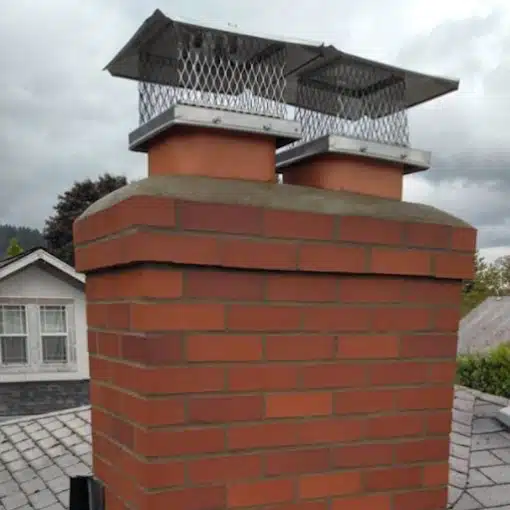
A single-flue cap covers one flue opening and is the standard choice for homes with one fireplace, furnace, or water heater vent sharing a chimney stack. Multi-flue caps cover two or more flues under one hood, common on older Portland homes with a shared chimney serving multiple fireplaces or a fireplace and furnace together.
Multi-flue caps need careful sizing, since each flue still needs its own draft path and a poorly fitted cap can cause appliances to compete for airflow. This is a case for professional assessment, not a one-size-fits-all product.
Top-Sealing Dampers and Gas Safety

Top-sealing dampers, sold under names like Lyemance and Lock-Top, combine a cap with a rubber-gasketed damper that seals the flue at the top instead of at the firebox, cutting drafts and energy loss more effectively than a traditional damper.
They are not compatible with gas log inserts or other gas-burning appliances, per manufacturer instructions. A sealed top-sealing damper on a gas appliance can trap carbon monoxide inside the flue, creating a serious poisoning or explosion risk. If your chimney vents a gas appliance, the damper needs to stay permanently open or be removed as part of a gas conversion. That’s a safety requirement, not a preference, and one we check before installing any top-sealing product.
Wind-Directional Caps for
Portland’s Exposure
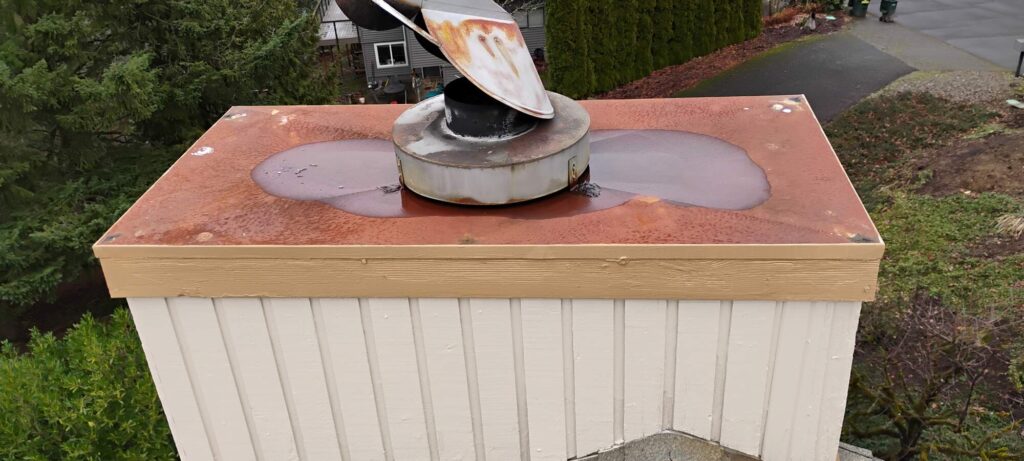
Wind-directional caps rotate or are angled to keep the opening facing away from prevailing wind, reducing the downdraft problems described earlier. Given the 98 mph design wind speed used for structural planning, homes on exposed lots, hilltops, or open corners benefit most from this style.
They cost more than a standard hood-style cap, but for a home that catches wind from multiple directions across the seasons, they solve a problem a fixed cap can’t.
Which Material Should You Choose: Galvanized, Stainless,
or Copper?
Material affects lifespan and appearance more than anything else about a chimney cap. Here’s how the three common options compare.
Galvanized Steel (3–5 Years)
Galvanized steel is the least expensive cap material and the shortest-lived. The zinc coating protecting the steel underneath breaks down faster in wet climates, and Portland’s rain gives it a real workout, holding up for roughly three to five years before rust starts to compromise the mesh and hood.
It’s reasonable for a rental property or short-term fix, but not for a homeowner who wants to install a cap once and move on.
Stainless Steel (25+ Years)
Stainless steel is the most common upgrade from galvanized, and for good reason. It resists corrosion far better and typically lasts 25 years or more, even in a wet, wind-exposed climate like Portland’s.
Most stainless caps use 304-grade steel, the standard grade for residential chimney caps. Homes closer to the coast or with heavy salt-air exposure sometimes step up to 316-grade stainless, a marine-grade alloy with added corrosion resistance. For most Portland homes, 304 stainless strikes the right balance of durability and cost.
Copper (50+ Years)
Copper is the longest-lasting and most visually distinctive option, often outlasting the roof itself at 50 years or more, though it’s also the most expensive, typically chosen for historic homes or as a visible architectural feature rather than a purely functional upgrade.
New copper is bright and reflective, developing a soft brown patina over the first one to three years and eventually a green verdigris as it weathers. That color change is cosmetic, not a sign of corrosion or failure, and it’s part of why copper caps are popular on Portland’s older brick chimneys.
Matching Your Cap to Your Home: Historic vs. Modern Portland Houses
Portland’s housing stock spans more than a century, and that history should shape which cap you choose.
Homes in historic neighborhoods like Irvington, Laurelhurst, Grant Park, and Alameda often have tall, narrow masonry chimneys built before modern codes, sometimes with original clay flue tiles and softer, historic mortar. On these chimneys, we typically recommend copper or stainless caps sized to the chimney’s original proportions rather than a generic off-the-shelf hood. A cap clamped too aggressively onto a historic flue can crack century-old tile already fragile from decades of freeze-thaw cycling.
Modern Portland builds, including newer construction in SW Hills and Arlington Heights, tend to have factory-built metal chimneys or standardized clay flues that take standard single-flue or multi-flue caps without the same fitting concerns, making galvanized or stainless caps the practical choice.
If your home falls into the historic category, our historic chimney restoration work reflects how much fitting and material choice matters on an older chimney, and it’s worth having us take a look before you assume a standard cap will fit. We’re glad to schedule a historic-home assessment as part of that conversation.
Who Should Install or Inspect Your Chimney Cap?
Installing a chimney cap looks simple from the ground, but it means working on a steep, often wet roof next to masonry that may already have hidden damage, not a great combination for a DIY project.
A professional inspection matters just as much as the installation itself. What looks like a simple cap swap can uncover deeper problems, a cracked crown, deteriorating mortar joints, or flue tile damaged by freeze-thaw cycling. That’s why we pair cap installation with a Level 1 inspection, the standard visual inspection for chimneys in regular use, so nothing gets missed underneath a brand-new cap.
We’re dual-licensed in Oregon (CCB #49750) and Washington (#PORTLCI005PZ), and our sweeps, including Earl and Angelica, are OCSA-certified through the Oregon Chimney Sweep Association. We’re also EPA Lead-Safe Certified, which matters on older Portland homes where lead paint may be present. If you’ve noticed staining, damp odors, or other signs of a chimney leak, an inspection is likely overdue, cap or no cap.
Request a Free Estimate for Your Portland Chimney Cap
A chimney cap is a small part of your roofline, but it protects everything underneath it: your flue, your masonry, and your home’s air quality. Getting the type, size, and material right the first time is worth doing properly.
We’ve spent 40+ years serving the Portland metro area, with every estimate transparent and no surprise charges added once the work begins. Whether you need a single cap replaced or a full chimney assessment, request a free estimate and we’ll walk you through exactly what your chimney needs.
Frequently Asked Questions
How long does a chimney cap last?
It depends on the material. Galvanized steel typically lasts three to five years, stainless steel 25 years or more, and copper 50 years or more. Portland’s rain and wind exposure make material choice especially important here.
Can I install a chimney cap myself?
You can, but it means working on a steep, often wet roof next to masonry that may already have hidden damage. Most homeowners let a professional handle it and use the visit to check the rest of the chimney.
Do I need a permit to replace a chimney cap in Portland?
It’s not entirely clear. Portland’s permitting guidance says repairs above the roofline generally don’t need one, while new construction or full removal does, but a standalone cap swap isn’t explicitly addressed. We confirm this before starting any retrofit work.
What’s the difference between a chimney cap and a chimney crown?
A cap is the removable metal cover over the flue opening. A crown is the concrete slab covering the entire top of the chimney, flue included. They work together, but one doesn’t replace the other.
Can a top-sealing damper be used with a gas fireplace?
No, top-sealing dampers are not compatible with gas log inserts or other gas appliances, according to manufacturer instructions, since a closed damper can trap carbon monoxide in the flue. On gas appliances, they need to stay open permanently or be removed.
