
Leaning Chimney Repair Solutions in Wilkes East
A leaning chimney represents one of the most dangerous structural problems any homeowner can encounter. This visible warning sign points to serious foundation issues or structural deterioration that requires immediate professional intervention.
For residents in Wilkes East, Oregon, recognizing the need for leaning chimney repair solutions could be the difference between a manageable repair and a catastrophic collapse. When your chimney starts moving, time becomes your enemy – and professional help becomes your lifeline.
Understanding Chimney Structural Instability

Think of your chimney as a tall, heavy tower standing alone against the elements. While your house has multiple walls supporting each other, your chimney stands solo – fighting wind, rain, and gravity all by itself.
In Oregon, this battle gets even tougher. Our region’s seismic activity means the ground literally moves beneath your chimney’s feet. Add in our wet winters and clay soils that expand and contract like a sponge, and you’ve got a perfect storm for structural problems.
Here’s what makes this particularly tricky: what looks like a small crack today could signal a foundation that’s slowly giving way. The difference between minor maintenance and major danger isn’t always obvious to the untrained eye.
Critical Warning Signs of Structural Problems
Your chimney might be crying for help, but are you hearing the signals? Structural problems rarely announce themselves with dramatic crashes. Instead, they whisper warnings that grow louder over time.
The Most Obvious Red Flag: Visible Leaning
If your chimney looks like the Leaning Tower of Pisa – even slightly – that’s your cue to call for help immediately. Any tilt away from perfectly vertical means something serious is happening underground or within the structure itself.
Cracks That Spell Trouble
Not all cracks are created equal. Small hairline cracks in mortar? Usually manageable. Large horizontal cracks or zigzag patterns that follow the mortar lines? That’s your chimney telling you it’s under serious stress.
When Your Chimney Pulls Away from Home
Notice gaps appearing where your chimney meets your house? This separation means your chimney is literally moving away from your home’s structure – a clear sign that foundations are shifting.
Foundation Problems You Can See
Walk around your chimney’s base. Cracks in the foundation itself, areas where the chimney appears to be sinking, or visible settling compared to surrounding structures all point to underground problems that need immediate attention.
Interior Warning Bells
Inside your home, new cracks near the chimney area, doors that suddenly stick, or unusual creaking sounds can all indicate that structural movement is affecting your entire house.
Foundation Issues That Cause Structural Instability
Most leaning chimneys trace their problems back to what’s happening underground. Your chimney’s foundation is its lifeline – and when that fails, everything above ground is in jeopardy.
The Soil Beneath Your Feet
Oregon’s clay-rich soil acts like a sponge. When it rains, the soil expands. During dry spells, it contracts. This constant expanding and shrinking creates an unstable platform for your chimney’s foundation. Poor drainage makes this problem worse by keeping soil saturated longer.
When Foundations Weren’t Built to Last
Many older homes were built when codes were less strict. What seemed adequate 50 years ago might not hold up to today’s understanding of soil conditions and earthquake requirements. Sometimes the foundation was simply too small or too shallow for the job.
Winter’s Hidden Damage
Water finds its way into foundation cracks or enters through vulnerable areas like damaged or poorly installed chimney flashing, then freezes and expands during cold snaps. Each freeze-thaw cycle makes cracks bigger, weakening the foundation bit by bit. After several winters, minor cracks can become major structural problems.
The Tree Root Problem
That beautiful oak tree planted near your chimney decades ago? Its roots might be slowly pushing against your foundation, creating pressure that builds over years before suddenly causing noticeable movement.
Construction Shortcuts Come Home to Roost
Poor original construction – inadequate reinforcement, corners cut on foundation depth, or failure to account for local soil conditions – can create problems that don’t show up for years or even decades.
Emergency Repair Needs Before Collapse
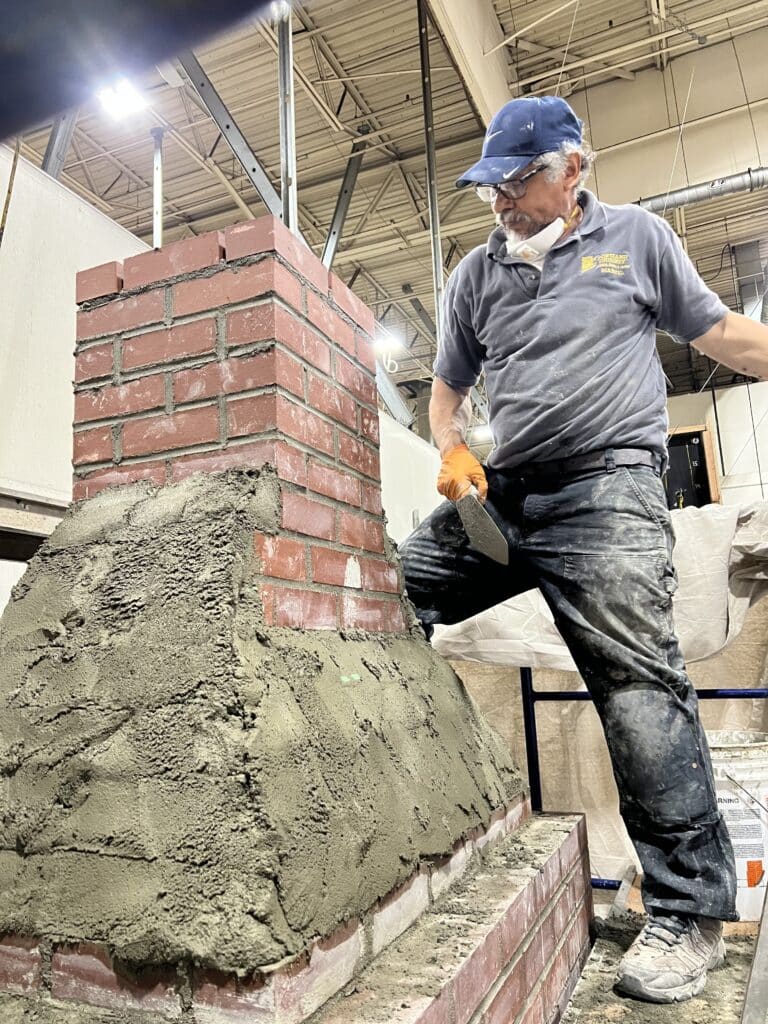
When your chimney shows signs of serious structural problems, every hour counts. What starts as a small lean can rapidly become a catastrophic collapse that destroys property and endangers lives.
When to Consider Evacuation
If your chimney is visibly leaning, showing large cracks, or has moved noticeably in a short time, treat it as an emergency. Stay away from areas where falling debris could cause injury, and keep family members and pets clear of potential collapse zones.
Emergency Support Measures
Professional contractors can install temporary bracing to prevent further movement while permanent repairs are planned. Never attempt DIY stabilization – this work requires specialized equipment and expertise that only professionals possess.
Protecting Your Utilities
Unstable chimneys can damage gas lines, electrical connections, and other utilities. Professional assessment should include checking all utility connections that could be affected by chimney movement or potential collapse.
Getting Expert Help Fast
When structural problems develop, you need more than a regular chimney contractor. Structural engineers may be necessary to assess whether the problem affects your entire building or represents an isolated chimney issue.
Stopping Further Damage
Emergency measures focus on preventing the situation from getting worse. This might include diverting water away from the foundation, securing loose masonry, or temporarily supporting the structure while permanent solutions are developed.
Prevention Strategies for Long-term Stability

While some structural problems result from factors beyond homeowner control, proactive maintenance and monitoring can identify developing issues before they become dangerous and expensive to repair.
Regular professional inspections should include assessment of chimney verticality using precise measurement tools that can detect movement before it becomes visible to the untrained eye. Annual inspections can establish baseline measurements that allow detection of gradual movement over time.
Foundation maintenance around chimneys includes ensuring proper drainage to prevent soil saturation, maintaining adequate clearance from tree roots, and promptly addressing any signs of foundation settling or cracking. Proper grading that directs water away from the chimney foundation prevents many soil-related stability problems.
Structural monitoring systems can be installed on chimneys that show early signs of movement, providing ongoing measurement of any changes in position or stability. These systems allow early intervention before problems become severe enough to require emergency repairs.
Seismic retrofitting for older chimneys can improve earthquake resistance and prevent structural damage during seismic events. Modern retrofitting techniques can significantly improve chimney stability without requiring complete reconstruction.
Frequently Asked Questions About Leaning Chimney Repair
How quickly do I need to address a leaning chimney?
A leaning chimney requires immediate professional assessment to determine the risk level and appropriate response. Any visible leaning indicates serious structural problems that can worsen rapidly, potentially leading to collapse. While not every leaning chimney requires emergency evacuation, professional evaluation should occur within days rather than weeks to assess safety and prevent further deterioration.
Can a leaning chimney be straightened?
In some cases, leaning chimneys can be straightened through foundation repair and structural reinforcement techniques. However, the feasibility depends on the extent of movement, the cause of the leaning, and the condition of the chimney structure itself. Some severely damaged chimneys require complete reconstruction rather than straightening. Professional assessment determines the most appropriate approach.
What causes chimneys to lean suddenly?
While chimney leaning often develops gradually, several factors can cause sudden movement including foundation washout during heavy rains, seismic activity, frost heave in winter conditions, or failure of inadequate foundations that finally give way under stress. Emergency assessment is crucial when sudden movement occurs.
How much does leaning chimney repair cost?
Repair costs vary widely depending on the cause and extent of structural problems. Minor foundation repairs might cost $2,000-$5,000, while major foundation reconstruction or complete chimney rebuilding can range from $8,000-$20,000 or more. Emergency repairs typically cost more than planned work. Portland Chimney & Masonry Inc provides free assessments to determine your specific repair needs and costs.
Will my insurance cover leaning chimney repairs?
Insurance coverage depends on the cause of the structural problem and your specific policy terms. Sudden damage from covered events like earthquakes, storms, or ground movement may be covered, while gradual deterioration from age or poor maintenance typically isn’t. Professional documentation of the problem’s cause is important for insurance claims.
Can I continue using my fireplace if the chimney is leaning?
Never use a fireplace connected to a structurally compromised chimney. Leaning chimneys may have damaged flue liners, compromised structural integrity, or separation from the house that creates serious fire and carbon monoxide risks. Discontinue use immediately and have the system professionally evaluated before any further operation.
What’s the difference between settling and structural failure?
Minor settling is normal in new construction and typically stabilizes within the first few years. Structural failure involves ongoing movement, visible leaning, large cracks, or separation from the house that indicates the foundation or structure cannot adequately support the chimney’s weight. Professional assessment can distinguish between normal settling and dangerous structural problems.
How can I prevent future chimney leaning problems?
Prevention strategies include maintaining proper drainage around the chimney foundation, regular professional inspections to detect early warning signs, prompt repair of minor foundation cracks before they worsen, and avoiding activities that could undermine the foundation such as planting large trees too close to the chimney. Regular maintenance and monitoring provide the best protection against structural problems.
Professional Solutions for Structural Chimney Problems
For over 40 years, Portland Chimney & Masonry Inc has provided expert structural chimney repairs throughout the Portland Metro area. Our experienced team understands the unique challenges that Oregon’s soil conditions, weather patterns, and seismic activity present for chimney stability.
We work with qualified structural engineers when necessary and use proven techniques to address foundation problems, stabilize leaning chimneys, and prevent future structural issues. Our comprehensive approach addresses underlying causes rather than just visible symptoms, ensuring long-term stability and safety.
Concerned about your chimney’s stability? Call Portland Chimney & Masonry Inc at (503) 256-9140 for immediate professional assessment. When structural problems develop, prompt action protects your family’s safety and prevents minor issues from becoming major reconstruction projects.
Portland Chimney & Masonry Inc – Oregon CCB #49750, Washington #PORTLCI005PZ
