

Chimney Leaks: Six Causes and How to Tell Which One You Have
Chimney leaks rarely have a single obvious cause. Water may appear in the firebox, stain the ceiling near the chimney, or leave white deposits on the brick exterior, but each symptom points to a different failure point. A cracked crown requires a different repair than deteriorated flashing, and applying waterproofing before identifying the real source can trap moisture and worsen the damage.
In the Pacific Northwest, chimneys face constant moisture exposure, repeated freeze-thaw cycles, and aging masonry systems that, in many homes, predate modern chimney construction standards. Identifying where the water is entering is the first step toward fixing the problem correctly.
Below are the six most common causes of chimney leaks and the signs that help distinguish one from another.

Missing or Failed Chimney Cap
The chimney cap covers the top of the flue opening. It keeps rain, debris, and animals out while also helping reduce downdrafts. When the cap is missing or damaged, water falls directly into the flue and works its way down to the smoke shelf, damper, and firebox.
Galvanized steel caps are one of the most common failure points. The protective coating eventually wears away, allowing rust to form at the mesh and mounting points. Caps installed with adhesive alone also fail quickly in wet, windy conditions because the bond weakens over time.
Symptom: Water dripping from the damper into the firebox during or immediately after rain. In open fireplaces, homeowners may also notice standing water or damp ash on the firebox floor.

Cracked or Failed Crown
The chimney crown is the concrete surface at the top of the chimney surrounding the flue tile. Its job is to direct water away from the masonry below. A properly built crown includes a drip edge and a separation joint between the crown and the flue tile so both materials can expand and contract independently.
Without that separation joint, the crown often cracks around the flue opening as temperatures change. Once water enters those cracks, freeze-thaw cycles widen them further each winter.
Small hairline cracks can often be repaired with an elastomeric crown coating. Larger cracks, missing sections, or sinking areas require full crown replacement. Roof tar and generic caulk rarely last and often trap moisture inside the crown instead of solving the leak.
Symptom: Ceiling stains near the chimney, white mineral deposits on the exterior brick, or visible cracking across the crown surface.
Deteriorated Flashing
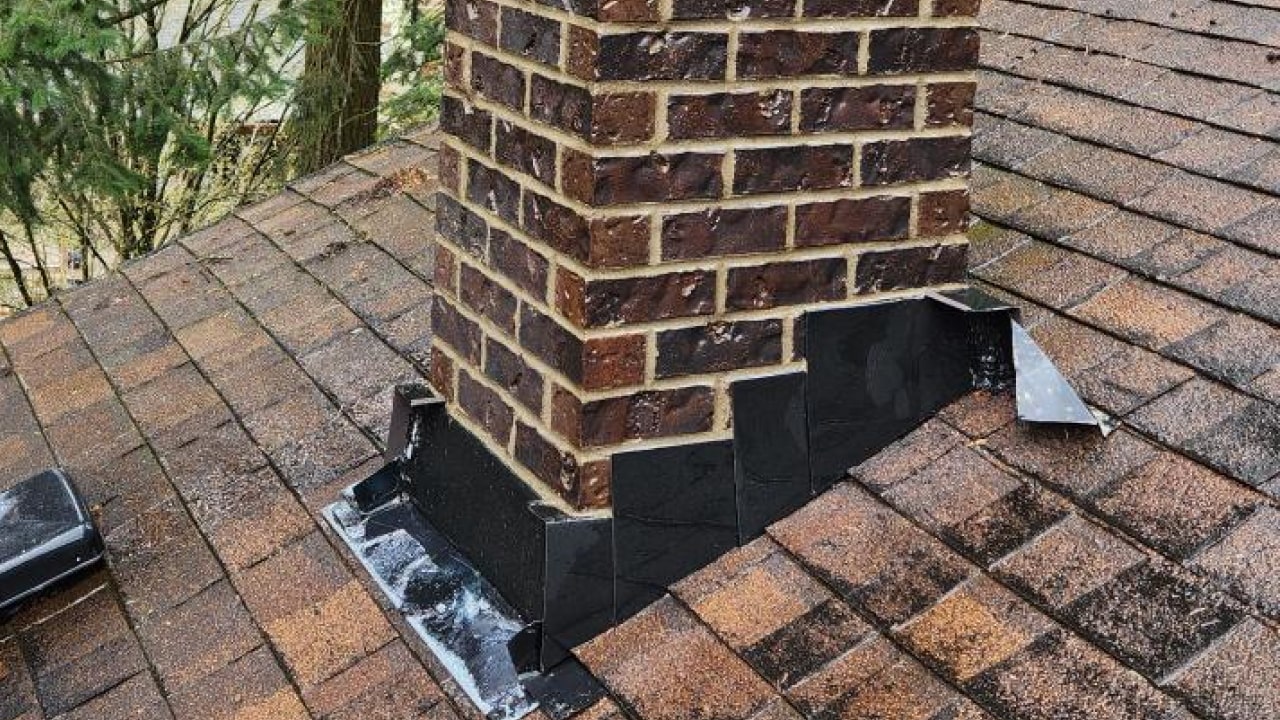
Flashing seals the joint where the chimney meets the roof. It includes step flashing layered into the roofing material and counter-flashing embedded into the chimney mortar joints above it.
When the mortar holding the counter-flashing begins to fail, water can work behind the metal and enter the home. Improper repairs are also common. Silicone caulk applied at the flashing joint usually separates from masonry after prolonged UV and moisture exposure.
Another issue involves chimney crickets. Building code requires a cricket on the uphill side of wider chimneys to divert water around the structure. Without one, water and debris collect behind the chimney, accelerating both flashing and masonry deterioration.
Symptom: Water staining on ceilings near the chimney during rainstorms or rust staining on shingles around the chimney base.
Cracked Mortar Joints and Spalling Brick
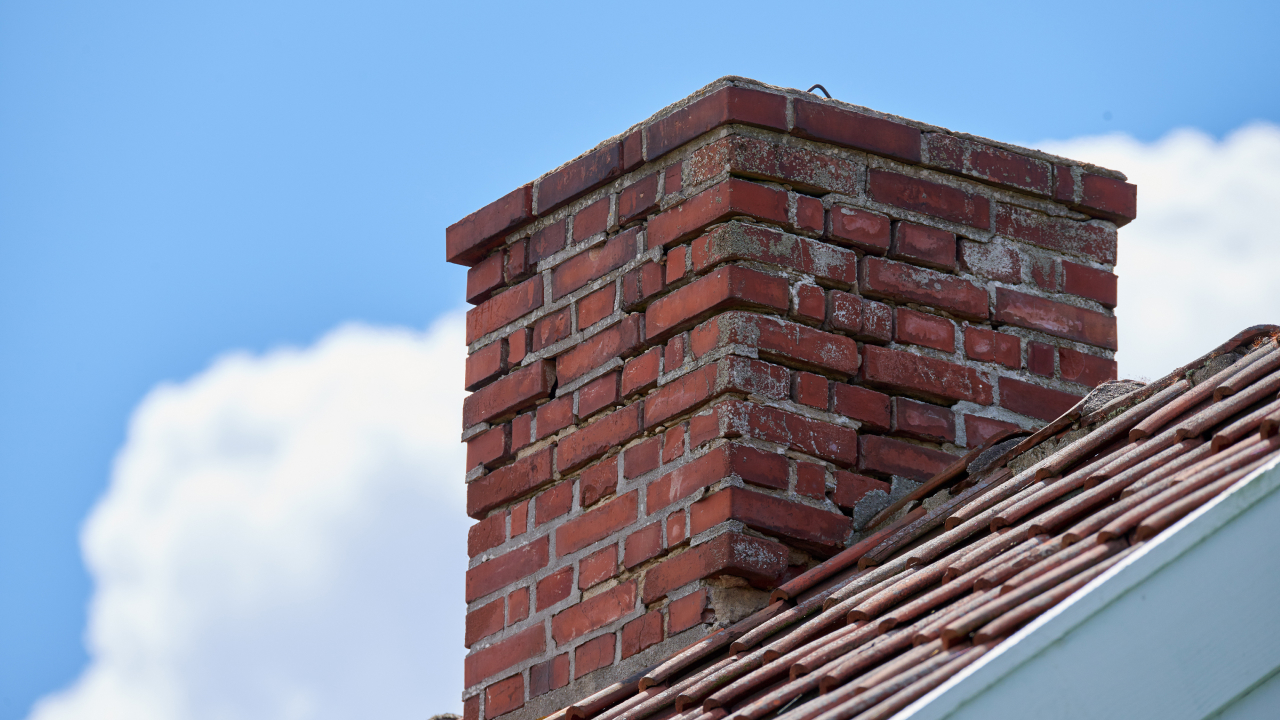
Brick and mortar naturally absorb moisture. Once mortar joints begin to erode, water enters the chimney structure more easily and expands during freeze-thaw cycles. Over time, this widens gaps in the mortar and damages the surrounding brick.
The type of brick and mortar matters. Historic homes often require softer lime-based mortar that allows the masonry to expand and release moisture properly. Harder modern mortars can force older brick faces to crack instead.
Spalling occurs when the outer face of the brick breaks away in layers or flakes. Once spalling starts, moisture penetration usually accelerates.
After repairs, many chimneys benefit from a vapor-permeable water repellent that slows future moisture absorption while still allowing trapped moisture to escape.
Symptom: White mineral staining, recessed mortar joints, flaking brick faces, or widespread moisture staining across the chimney exterior.
Condensation from an Oversized or Uninsulated Liner
This problem often gets mistaken for a roof or masonry leak. When a newer gas insert vents through an oversized masonry flue, the exhaust gases may cool too quickly before exiting the chimney. That cooling creates condensation inside the liner.
The moisture then collects along the interior walls of the chimney and appears near the firebox or cleanout door. Waterproofing the exterior will not solve this issue because the water originates from within the flue system.
The correct repair usually involves installing a properly sized insulated liner matched to the appliance specifications. For more information about liner materials and sizing, see our chimney liner installation service.
Symptom: Moisture, white staining, or musty odors near the firebox during warm weather without active rain intrusion.
Porous Masonry Without Waterproofing
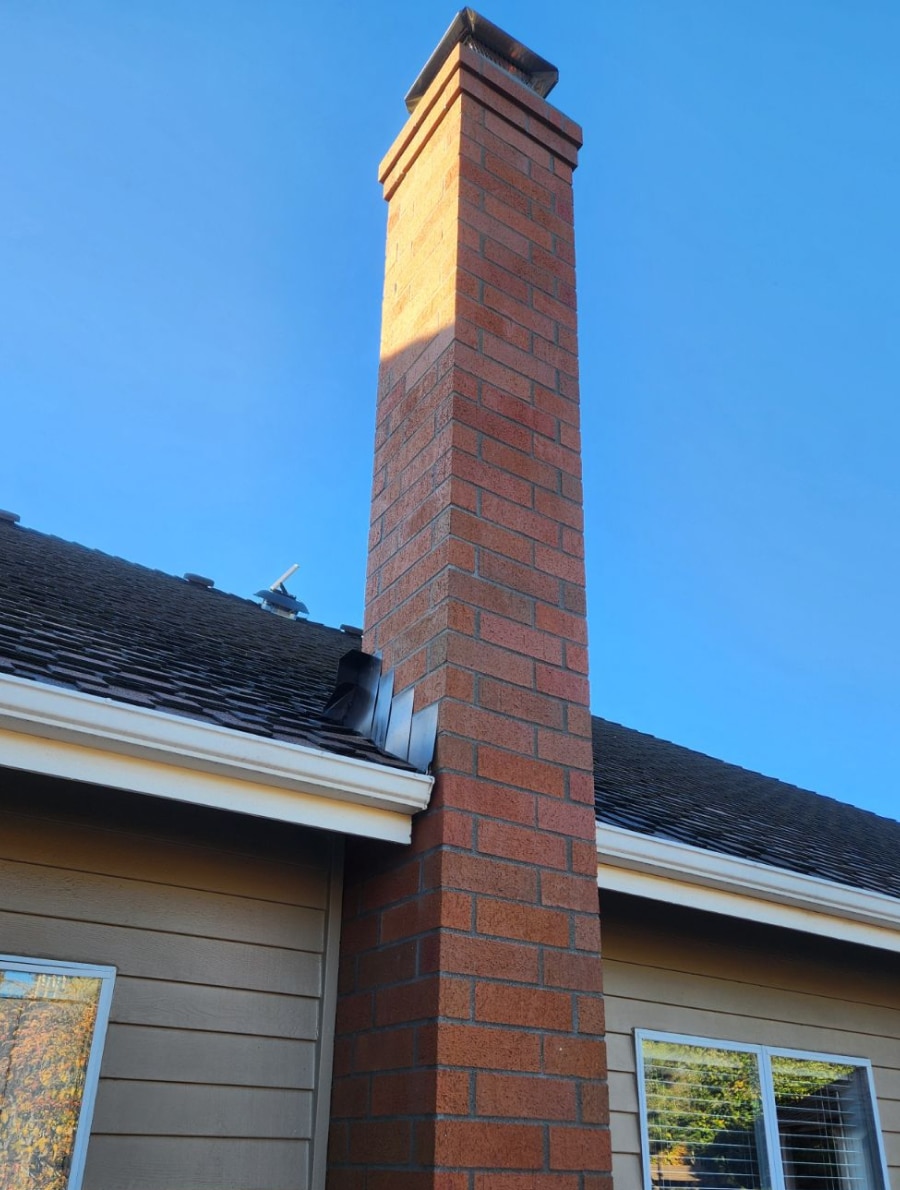
All masonry absorbs some amount of moisture. Without a breathable water repellent, repeated rain exposure gradually saturates the brick and mortar, especially in older chimneys.
This issue usually develops slowly rather than creating an obvious leak. Over time, moisture absorption contributes to mortar erosion, efflorescence, and freeze-thaw damage.
The type of waterproofing matters. Vapor-permeable products allow trapped moisture to escape while slowing future absorption. Film-forming sealers trap moisture inside the masonry and often worsen spalling.
Symptom: Brick that stays dark for days after rain, broad areas of efflorescence, and general moisture absorption without a single visible leak source.
Partner With Portland Chimney & Masonry for a Proven Chimney Leak Repair
Many chimney leaks involve more than one active problem. A failed cap may coexist with deteriorated mortar joints, or flashing issues may occur alongside crown cracking. Identifying every moisture entry point before starting repairs helps prevent repeat leaks and short-term fixes.
Portland Chimney & Masonry has diagnosed and repaired chimney leaks throughout the Portland metro for more than 35 years. Our OCSA-certified team, including Earl and Angelica, documents each issue thoroughly before recommending repairs. For more information about chimney repair options, see our chimney repair service page. To schedule an inspection before the rainy season, call (503) 256-9140.