

Chimney Relining: Stainless Steel vs. Terra Cotta (and When Cast-in-Place Makes More Sense)
Most homeowners first hear the term “chimney relining” after a Level 2 camera inspection reveals cracked clay tiles, deteriorated mortar joints, or an older chimney without a liner. Once that happens, the question is no longer whether the chimney needs relining. The real question is which liner system fits the chimney’s condition, fuel type, and long-term use.
This guide explains the three primary chimney relining options used today: clay tile liners, stainless steel liners, and cast-in-place systems. Each has advantages in the right situation, and the best choice depends on what the inspection reveals inside the flue.
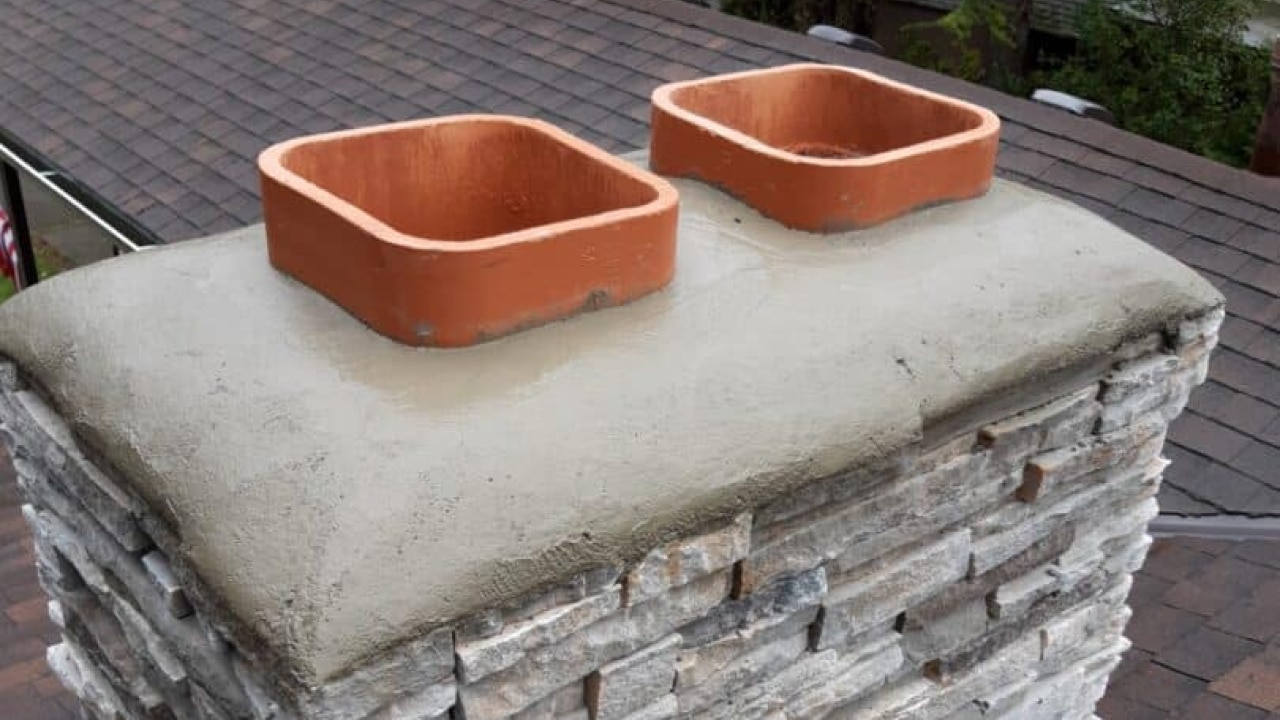
Clay Tile (Terra Cotta) Liners
Clay tile liners, sometimes called terra cotta liners, served as the standard chimney liner material throughout most of the 20th century. They handle high temperatures well and can last for decades under stable conditions.
The problem is that clay tile does not tolerate sudden temperature changes well. During a chimney fire, temperatures inside the flue can rise rapidly and crack the tile walls. Once the liner cracks, heat and combustion gases can escape into the surrounding masonry and framing.
The mortar joints between tile sections also weaken over time. Moisture enters small gaps, freezes during winter weather, expands, and gradually widens the joints further.
When Clay Tile Makes Sense
New clay tile liners work best during full chimney rebuilds, new chimney construction, and when the chimney structure is already being rebuilt from the top to bottom. As a retrofit inside an existing chimney, however, replacing clay tile is usually labor-intensive because the chimney often requires partial disassembly to remove and replace the original sections.
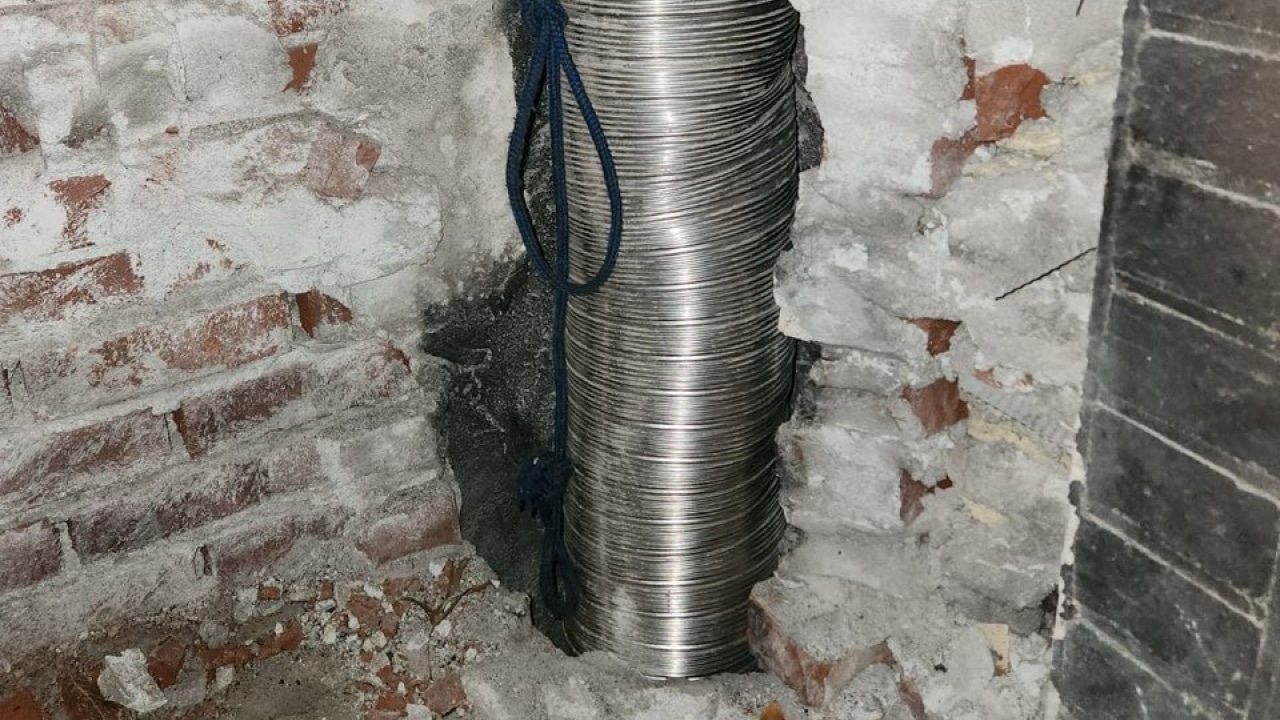
Stainless Steel Liners
Stainless steel liners are the most common relining solution for existing chimneys. Flexible liner systems can navigate offsets and irregular flue paths without dismantling the chimney structure.
When properly installed and insulated, stainless steel liners provide a reliable long-term solution for many fireplaces, inserts, and stoves. Every liner installed in a residential chimney should carry a UL 1777 listing to meet code requirements.
Choosing the Correct Stainless Steel Grade
The liner grade matters because different appliances produce different exhaust conditions.
316Ti stainless steel is required for wood-burning and oil-burning appliances because it resists the acidic condensates produced during combustion. 304 stainless steel is designed for gas appliances, which produce less corrosive exhaust.
Using the wrong grade significantly shortens the liner’s lifespan. Wood-burning systems installed with 304 stainless often fail early from corrosion, while properly installed 316Ti liners hold up far longer under the same conditions.
Why Insulation Matters
Insulation helps the liner maintain proper flue temperature. Without it, cooler flue temperatures increase condensation and creosote accumulation and weaken draft performance. Most systems use either a UL-listed insulation wrap around the liner or a poured insulation fill placed between the liner and the existing flue walls.
One Tradeoff to Consider
Because the liner sits inside the existing flue, the stainless steel slightly reduces the chimney’s interior dimensions. On larger fireplaces, liner sizing and draft calculations become especially important to maintain proper performance.
Flexible stainless liners also handle seismic movement better than rigid clay tile systems because they contain fewer mortar joints that can separate over time.
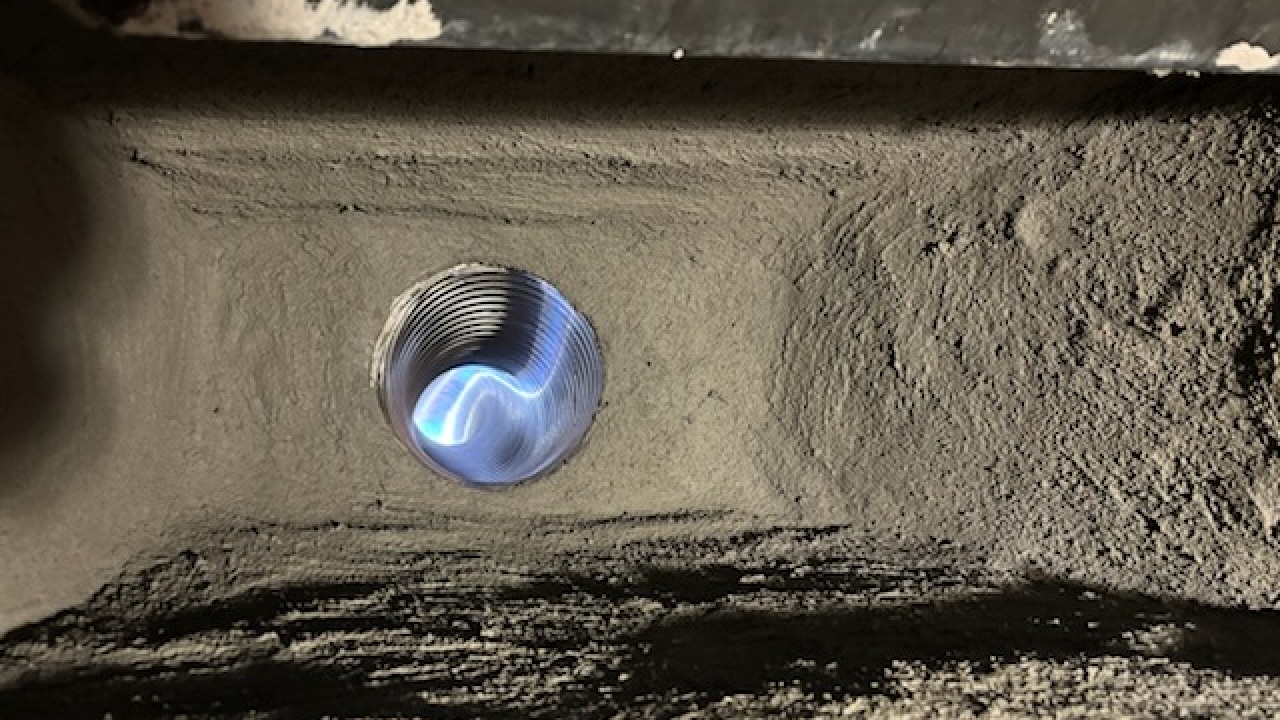
Cast-in-Place Liners
Cast-in-place liner systems repair the inside of the chimney by applying a refractory cement mixture directly along the flue walls. Common systems include Thermocrete, Supaflu, and Ahrens.
Unlike stainless steel liners, cast-in-place systems restore the flue interior without significantly reducing its dimensions. The finished liner forms a smooth, continuous surface with no tile joints.
When cast-in-place is the best option
Cast-in-place liners work well when the chimney structure itself remains stable, the existing clay liner has cracked tiles or failed mortar joints, or maintaining original flue dimensions is important for fireplace performance. Because the system uses the existing chimney as its structural form, the surrounding masonry must still be in sound condition.
When cast-in-place is not appropriate
Cast-in-place systems cannot correct major structural failures such as leaning chimneys, severe brick deterioration, missing masonry sections and significant structural instability. In those situations, structural repair or full rebuilding comes first.

Choosing the Right Liner
The right liner depends on the chimney’s condition, the appliance connected to it, and what the camera inspection reveals inside the flue.
✓ Older unlined chimneys: Stainless steel flexible liners are usually the standard solution. They install without dismantling the masonry structure and adapt well to the irregular flue paths common in older homes. Replacing an unlined chimney with new clay tile typically requires major reconstruction, which makes it impractical as a retrofit option.
✓ Clay tile liners with cracks or failed mortar joints: Cast-in-place systems often make more sense when the chimney structure itself remains stable. They restore the interior flue surface without narrowing the flue dimensions or requiring tile removal, which helps preserve draft performance on larger fireplaces.
✓ Full chimney rebuilds or new construction: New clay tile liners are still appropriate when rebuilding the chimney. In these cases, the liner installs as part of the masonry construction itself.
Choosing the Right Solution for Your Chimney
Stainless steel, terra cotta, and cast-in-place liners all serve legitimate purposes. The right choice depends on the chimney’s structure, the condition of the existing liner, and the type of appliance venting through the system.
Portland Chimney & Masonry has provided chimney relining throughout the Portland metro for more than 35 years. Our OCSA-certified team, including Earl and Angelica, performs Level 2 camera inspections before recommending any relining work and explains the findings in writing.
For more information about chimney repair and maintenance planning, see our chimney repair service page and our professional chimney cleaning. To schedule an inspection or discuss relining options, call (503) 256-9140.