
Chimney Smoking & Draft Problems in Portland, OR: A Homeowner’s Guide
After several winter house fires in the area, Portland Fire & Rescue issued a stark reminder about chimney safety. For many homeowners in Beaverton and Lake Oswego, a smoking fireplace isn’t just a nuisance, it’s often a sign of a deeper problem. Is it a simple fix or a serious hazard?
This guide explains the common causes of chimney smoking in Portland-area homes and what you can do about it.
OCSA-Certified • 40+ Years Experience • 100+ 5-Star Reviews
The 3 Main Reasons Your Portland Chimney is Backdrafting
A properly functioning chimney uses the principle of “stack effect”—hot air from the fire rises, creating a pressure difference that pulls smoke up and out of your home. When this process fails, you get backdrafting. Here are the three most common culprits we see in the Portland metro area.
1. A Blocked or Dirty Flue in Your Portland Home
The most frequent cause of a smoking chimney is a simple blockage. In Portland’s damp climate, this is often due to a buildup of creosote, a flammable, tar-like substance that forms when wood smoke cools and condenses on the inside of your flue. This buildup not only restricts airflow, causing smoke to back up into your home, but it is also a leading cause of dangerous chimney fires.
2. Negative Air Pressure in Modern Portland Homes
Modern homes are built to be airtight for energy efficiency. Many older homes in Portland, from Laurelhurst to Sellwood, have been retrofitted with new windows and insulation, creating the same effect. This can lead to a phenomenon called negative air pressure. When you run exhaust fans in your kitchen or bathroom, or even a clothes dryer, your house is pulling air in from the outside. If your chimney is the easiest source of makeup air, it will pull air down the flue, bringing smoke with it.
3. Improper Chimney Construction in Older Portland Homes
For a chimney to draft properly, it needs to be the right height and the flue needs to be the right size for the appliance it’s serving. According to building codes, a chimney must extend at least three feet above the roofline and two feet higher than anything within a ten-foot radius. In neighborhoods with tall trees or complex rooflines, like the West Hills, an improperly sized chimney can be susceptible to wind-induced downdrafts. Many older Portland homes also have unlined or improperly lined flues, which can be too large or too small to vent efficiently, leading to a weak draft and a smoky fireplace.
Your Next Steps: Get a Clear Answer in 48 Hours
That string of winter house fires Portland Fire & Rescue warned about started with problems just like these. Book a Level 2 video inspection today. Most Portland-area homeowners get a clear, definitive answer on the cause of their chimney smoke within 48 hours of our visit.
Have a quick question first?
Call us at (503) 256-9140 to speak directly with a technician.
Frequently Asked Questions
How much does it cost to fix a chimney draft problem in Portland?
The cost depends entirely on the cause. A simple chimney sweeping to remove a blockage might cost between $250 and $400. If the issue is negative air pressure or an improperly sized flue, the solution could involve installing a new chimney liner or a fresh air intake system, which can range from $1,500 to $5,000 or more.
Can I use my fireplace if it’s smoking a little?
No. Any smoke entering your home is a sign of improper venting and a potential carbon monoxide risk. You should not use your fireplace until the cause has been identified and resolved by a professional.
Will a chimney cap solve my draft problem?
In some cases, yes. If your draft problem is caused by wind blowing down your chimney, a specialized chimney cap can solve the issue. However, a cap will not fix a problem caused by a blockage or negative air pressure.
How do Portland’s wet winters affect chimney creosote buildup?
Portland’s damp climate accelerates creosote formation. The constant moisture in the air means that wood never burns completely dry, leading to cooler flue gases and more condensation. This is why annual inspections are critical in our area.
Do I need a chimney inspection before buying a home in the Portland metro area?
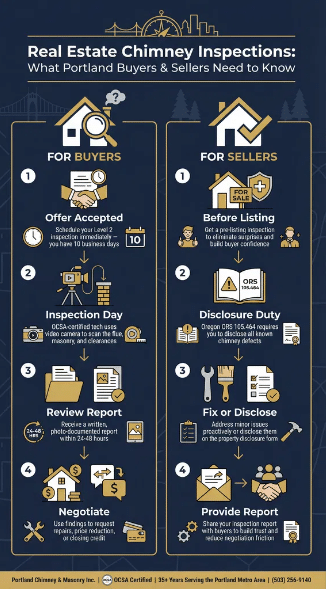
While not a state law, a Level 2 inspection is the standard of practice recommended by the NFPA for all real estate transactions. This is the only way to know the true condition of the chimney before you buy it.
How often should I have my chimney inspected to prevent smoking?
The National Fire Protection Association (NFPA) and Portland Fire & Rescue recommend an annual chimney inspection for all active fireplaces and wood stoves. This is the best way to catch creosote buildup and other potential issues before they lead to a smoking problem.