
How Chimneys Cause Carbon Monoxide Poisoning: A Portland Homeowner's Guide
This guide was written for the homeowner who understands that safety is more than just a smoke alarm.
The 3 Ways Your Chimney Can Cause Carbon Monoxide Backup
While most people associate carbon monoxide with gas furnaces, your wood-burning fireplace is a significant potential source. Here are the three most common chimney-related failures that lead to CO exposure in Portland-area homes.
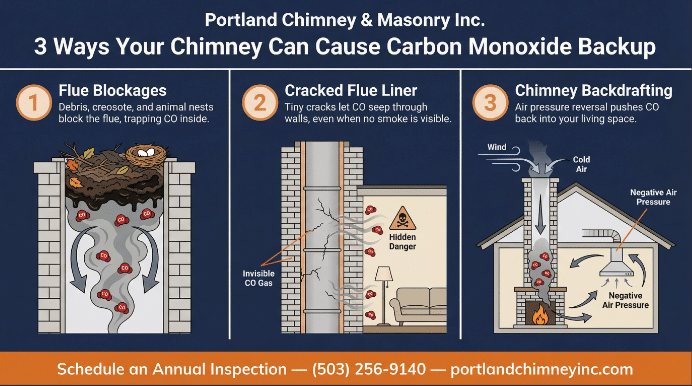
1. Flue Blockages: When Debris Traps CO Inside
A chimney flue is a vertical passageway that directs smoke and toxic gases out of your home. When this path is blocked, those gases have nowhere to go but back into your living space. Common causes of flue blockages include:
Creosote Buildup: The most common cause. This tar-like substance, which you can learn more about in our guide to creosote, accumulates over time and can restrict or completely block airflow.
Animal Nests: Birds, squirrels, and other animals often build nests in chimneys, especially during the off-season.
Masonry Debris: In older Portland homes, it’s common for bricks or mortar to collapse inward, creating a blockage. This often requires professional masonry repair.
2. Damaged Flue Liners: The Invisible Pathway for CO Leaks
The flue liner is a critical safety component that contains the byproducts of combustion. A damaged liner is one of the most common red flags in an inspection report. In many older Portland homes, these are made of clay tiles that crack and deteriorate over time due to the region’s near-constant moisture and seasonal temperature shifts.
Because carbon monoxide is a gas, it can easily seep through these tiny cracks into your home’s structure, even when you don’t see or smell the larger particles that make up smoke.
3. Chimney Backdrafting: When Airflow Reverses
Backdrafting occurs when the air pressure inside your home is lower than the pressure outside, causing the flow of air in your chimney to reverse. This pulls smoke and carbon monoxide back down the chimney and into your home.
This is particularly common in well-sealed, energy-efficient homes and can be exacerbated by running exhaust fans (like in a kitchen or bathroom) while a fire is burning.
CO Warning Signs vs. Chimney Warning Signs: What to Look For
Recognizing the danger of carbon monoxide is difficult because its symptoms mimic common illnesses. It’s crucial to understand the difference between the signs of CO exposure and the signs of a chimney problem.
| Signs of CO Exposure (Seek Medical Attention) |
Signs of a Chimney Problem (Schedule an Inspection) |
|---|---|
| Dull, persistent headache | White, powdery staining on the outside of the chimney (efflorescence) |
| Nausea, vomiting, and dizziness | Cracked or deteriorating bricks and mortar joints (spalling) |
| Shortness of breath and confusion | Rust on the damper or in the firebox |
| Blurred vision and loss of consciousness | Water damage or staining on walls near the chimney |
Frequently Asked Questions About Chimney CO Safety
Do I need a CO detector if I have a wood-burning fireplace?
Yes, absolutely. While Oregon law has specific requirements for rental and for-sale properties, every fire safety organization, including the Oregon State Fire Marshal, strongly recommends a CO detector for any home with a fuel-burning appliance. A wood fire produces significant amounts of carbon monoxide, making a detector a non-negotiable layer of safety.
How often should I have my chimney inspected for CO risk?
The official recommendation from both the National Fire Protection Association (NFPA) and the Oregon Chimney Sweeps Association is simple: every year. An annual inspection ensures that small problems are caught before they can become major safety hazards.
What does a chimney inspection cost in the Portland area?
A standard Level 1 chimney inspection in the Portland area typically costs between $150 and $350. This inspection is a visual assessment of the readily accessible parts of your chimney and is sufficient for most annual check-ups.
Can a new, energy-efficient home still have CO problems?
Yes. In fact, newer, more airtight homes can be more susceptible to backdrafting because they lack the natural ventilation of older homes. This makes proper chimney function even more critical.
Will a chimney sweep fix CO problems?
A chimney sweep, or cleaning, is a crucial part of preventing CO problems, as it removes the creosote buildup that can cause blockages. However, a cleaning alone does not address issues like a cracked flue liner or structural damage. A comprehensive inspection is necessary to identify all potential CO hazards.
Ready to Ensure Your Chimney is Safe?
Understanding the risks is the first step. The next is a professional, OCSA-certified inspection to ensure your chimney is venting safely and protecting your family. Our technicians can provide a comprehensive assessment and answer any questions you have.